If you’ve ever stepped into a community pharmacy’s back room at 8 a.m., you’ve probably seen it: a drug bagging machine whirring quietly, pulling labeled pill bottles, prescription vials, and sometimes blister packs into neatly sorted bags before a pharmacist even finishes checking a patient’s chart. As a drug bagging machine supplier who’s spent the last 12 years troubleshooting, upgrading, and talking to pharmacists every week, one question comes up more than any other: “What’s the real speed adjustment range of these machines—and why does it matter for my workflow?” Drug Bagging Machine
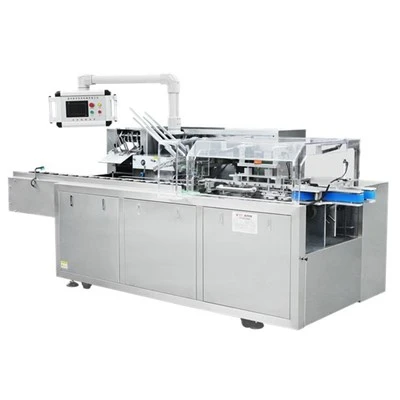
A few years back, I had a pharmacist in Des Moines call me panicking. His 10-bay bagging machine was set to run at maximum speed, but every time it kicked into high gear, it would misalign prescription labels, jam with blister packs, and hold up his entire morning prescription rush. He thought he’d wasted money on overbuilt equipment, but when I drove down to take a look, the problem wasn’t the machine’s top speed—it was that he had never adjusted its lower settings for the slow, precise work his small geriatric pharmacy needed. That story stuck with me, because it’s the reason I spend so much time breaking down speed ranges for customers, instead of just handing over a spec sheet full of numbers.
First, let’s get the basics out of the way: when we talk about speed for drug bagging machines, we’re not talking about a car’s speedometer. The “speed unit” here is prescriptions per hour (PPH)—that’s the number of individual, correctly bagged prescriptions a machine can process in one hour, adjusted for package size, label complexity, and any special add-ons you’ve paired with it. The speed adjustment range, simply put, is the gap between the slowest practical speed a machine can run without errors and its tested maximum speed under ideal conditions. For modern, commercial-grade drug bagging machines (the kind most independent and chain pharmacies rely on), that range isn’t one-size-fits-all. It’s calibrated for how the machine is built.
Let’s break down the most common ranges you’ll find across the industry, because not all machines are made equal. Entry-level machines, the kind sold to small, rural pharmacies with under 500 prescriptions a day, typically have a speed adjustment range of 150 to 600 PPH. These are compact, single-bay models designed for light workloads, and their lower end is dialed in for small, manually fed operations where a pharmacist might stop to double-check a prescription mid-run. I’ve seen these work perfectly for a pharmacy in Iowa that only opens four days a week, serving a tight-knit farming community with mostly 30-day prescriptions—cranking them up to 550 PPH on days when they have extra help, and dropping to 150 when they’re short-staffed.
Mid-range machines, the workhorses for pharmacies with 500 to 2,000 daily prescriptions, have a much wider range: 200 to 1,200 PPH. This is the sweet spot most of our customers land on. What makes this range flexible is that mid-range models come with adjustable sensors and feeders that can handle everything from tiny blister packs for pediatric antibiotics to large, multi-prescription bags for long-term care facilities. A pharmacy that serves a nursing home, for example, might need to run at 800 to 1,000 PPH during the morning rush, but when they’re processing new patient intakes that require double-labeling and extra verification, they can drop down to 250 PPH to avoid errors. I had a customer in Minneapolis who uses his mid-range machine this way—he’ll set it to 1,100 PPH on weekdays, and on Sundays, when he only has three people on staff and is filling 200 new prescriptions, he runs it at 300 PPH to make sure every label is correct before patients pick them up.
Then there are high-capacity, industrial-grade machines for pharmacies with 2,000+ daily prescriptions—think large chain hubs, mail-order facilities, or specialty pharmacies that handle controlled substances or hazardous drugs. Their speed adjustment range is the broadest, usually 300 to 2,500 PPH. This range is built for scalability: on a normal weekday, a mail-order facility might run at 2,000 PPH to get thousands of prescription bags out for shipping, but when they’re handling a one-time order for a specialty drug that requires extra safety checks, they can dial it back to 300 PPH to ensure every step of the process is compliant.
But here’s the part no spec sheet will tell you: the speed adjustment range isn’t just a number on a page. It’s only useful if the machine can actually adjust to that range without sacrificing accuracy. I’ve had customers come to me after buying a cheap, no-name machine online that said it had a 100 to 2,000 PPH range, but when they tried to run it at 250 PPH, it would feed the wrong prescription vials, and when they tried to run it at 1,800, it would jam every 10 bags. That’s because those machines have fixed speed settings, not a true adjustable range—they’re just two preset modes, not a continuous spectrum of speeds you can tweak based on your workflow.
For a machine to have a legitimate, useful speed adjustment range, it needs three key features: adjustable feed speed, variable conveyor belt tension, and real-time error sensors that slow the machine down automatically if a label misaligns or a package is off. At our company, we design every machine with a continuous adjustment range, not preset modes, so our customers can set their speed to any number between the two extremes, with increments as small as 50 PPH if they need them. That’s why when Des Moines pharmacist called me a few years back, we didn’t replace his machine—we adjusted its feeder tension and showed him how to set it to 400 PPH, which was perfect for his workflow, instead of forcing him to run at 600 PPH or settle for a lower speed he didn’t need.
Now, why does this range matter for your pharmacy? Let’s talk about the real-world impact. If your machine’s speed range is too narrow, you’ll either be leaving productivity on the table (running at a speed that’s too slow for your rush) or making mistakes (running at a speed that’s too fast for your workload). I’ve seen pharmacies lose thousands of dollars in inventory and patient trust because a machine was set at maximum speed and mislabeled 50 prescriptions in a single day. On the flip side, a pharmacy that’s overstaffed and uses a machine with a range that tops out at 500 PPH will be wasting money on labor, because their machine can’t keep up during peak times.
Another big factor: compliance. Pharmacies are tightly regulated by organizations like the FDA and state pharmacy boards, which require every prescription to be correctly labeled, sorted, and tracked. The speed adjustment range directly ties into compliance because if you have to slow your machine down to fix errors, you’re not just losing time—you’re also risking missed verification steps. A machine with a wide, flexible range lets you run at the fastest speed that keeps your error rate below 0.1% (the industry standard for compliant bagging), which is a balance every pharmacist needs to strike.
Let’s also talk about how to choose the right speed range for your pharmacy, because that’s the part that trips most people up. First, calculate your average daily prescription volume over the last three months. If you average 700 prescriptions a day, you don’t need a high-capacity machine that tops out at 2,500 PPH—you’ll be paying for features you’ll never use. You’ll want a mid-range machine with a 200 to 1,200 PPH range, which will cover your normal rush and give you enough flexibility to slow down for complex orders. If you’re a small pharmacy with under 500 prescriptions a day, an entry-level machine with a 150 to 600 PPH range is perfect—you don’t need to spend extra on a range that goes higher than you’ll ever use.
Another tip: ask about incremental adjustments. A lot of manufacturers will advertise a wide range, but it’s divided into only two or three preset speeds. Our customers love that we let them set their machine’s speed to any number within its range, because one pharmacy might run at 550 PPH on Tuesdays and 700 on Wednesdays, and another might need to adjust by just 100 PPH to avoid jams during flu season. We also include a free workflow assessment with every machine we sell, where we help customers test their own prescriptions on our machines to find their ideal speed range—no guesswork required.
I mentioned that Des Moines pharmacist earlier—he’s still a customer today. A year after we adjusted his machine’s speed, he told me his error rate dropped by 80%, and he was able to cut his back-room staff time by two hours a day. That’s the real value of understanding a drug bagging machine’s speed adjustment range: it’s not just about how fast it can go, it’s about how well it fits your specific pharmacy’s needs, workflow, and compliance rules.
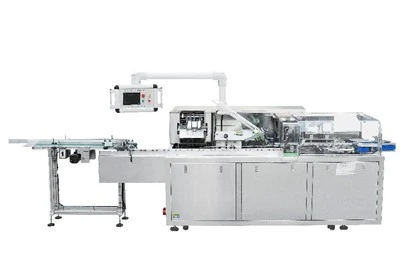
If you’re shopping for a new drug bagging machine, don’t just look at the top speed. Dig into the adjustment range, ask if it’s a continuous adjustable range or preset modes, and make sure it comes with sensors that adjust speed automatically if a package or label is misaligned. If you’re not sure which range is right for your pharmacy, or you want to learn more about how our machines’ ranges work, our team is here to help. We work with pharmacies of all sizes, from small rural shops to large mail-order hubs, to find the right machine and speed settings that make their back room run smoother, faster, and more accurately. Reach out to our team today to discuss your specific workflow and prescription volume, and we’ll walk you through everything you need to know to make the right choice for your pharmacy.
Daily Necessities Bagging Machine References
- National Community Pharmacists Association. (2022). Workflow Efficiency and Compliance in Independent Community Pharmacies. NCPA Research Report.
- U.S. Food and Drug Administration. (2021). Compliance Policy Guide for Automated Prescription Packaging and Labeling Systems. FDA Center for Drug Evaluation and Research.
- Pharmacy Society of the State of New York. (2023). Operational Benchmarking for Pharmacies: Speed, Accuracy, and Labor Costs. PSSNY Best Practices Report.
Zhejiang Tuoyu Packaging Machinery Co., Ltd.
Zhejiang Tuoyu Packaging Machinery Co., Ltd. is one of the most professional drug bagging machine manufacturers and suppliers in China. With abundant experience, we warmly welcome you to wholesale durable drug bagging machine made in China here from our factory. Good service and quality products are available.
Address: Workshop No.12, No.11-19, Xinbin Road, Binhai New Area, Pingyang County, Wenzhou City
E-mail: 15868789201@163.com
WebSite: https://www.tuoyupack.com/
