If you’ve ever stood next to a manufacturing plant, a wastewater treatment facility, or a pipeline that hauls oil, chemicals, or clean water across hundreds of miles, you’ve probably never stopped to think about the gate valve buried inside a pipe wall or tucked behind a control panel. But that gate valve? Its stem is the unsung hero of the whole assembly. I’m a gate valve supplier, and I’ve spent 12 years talking to plant engineers, maintenance foremen, and procurement managers who’ve told me the same horror story: a valve stem that failed mid-shutdown, a pipeline leak that could’ve been prevented, or hours of unplanned downtime that cost tens of thousands of dollars. Let’s break down exactly what a gate valve stem needs to do, because cutting corners here isn’t just a bad idea—it’s a costly one. Gate Valve
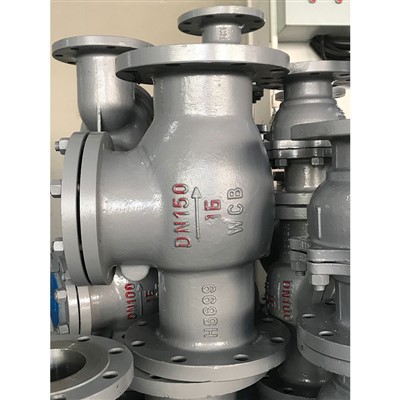
First off, let’s get on the same page about what a gate valve stem actually is, for anyone new to the space. A gate valve works by lifting a flat, wedge-shaped gate out of the pipe’s flow path to open it, or lowering it tight against the pipe’s seat to shut off flow completely. That up-and-down (or sometimes rotating, depending on the design) motion comes from the stem: a long, slender metal rod that connects the handwheel (or actuator, for automated valves) on the outside of the valve body to the gate inside. It’s the only part of the valve that moves repeatedly every time you open or close it, so it has to carry way more stress than just about any other component in the valve assembly.
Let’s start with the non-negotiable first requirement: strength. I don’t mean “strong enough to hold up a paperclip”—I mean tensile and yield strength that can handle all the forces acting on it. When you crank a handwheel to close a gate valve tight, you’re not just turning a knob—you’re pushing the gate hard enough to seal against pipe pressure, which can be hundreds of pounds per square inch, even on small valves. If that stem bends or breaks under that force, the gate won’t seal, and you’ve got a leak on your hands.
I’ll give you an example from a customer I worked with last year: a small food processing plant that was sourcing cheap gate valves from a generic supplier. They had a 4-inch valve on their high-pressure steam line that failed on a Friday shift. The stem bent mid-closure, so the gate couldn’t seat, and steam poured into the plant’s utility room. They had to shut down production for 18 hours to replace the valve, and lost nearly $70,000 in product and downtime. When we took out the old valve, the stem was made of a low-grade carbon steel that couldn’t handle the 150 psi steam pressure the plant was running. We swapped it for a gate valve with a 316 stainless steel stem and haven’t had an issue in the 18 months since. That’s the kind of mistake that comes from ignoring strength requirements.
Next up, corrosion resistance. This is another make-or-break requirement, and it’s way more variable than strength, because the environment the valve lives in changes so much. If a valve is in a clean water line in a municipal water plant, mild corrosion resistance might be enough. But if it’s in a chemical processing plant handling sulfuric acid or caustic soda? Or a marine pipeline where salt spray eats away at every metal part? Or a wastewater treatment plant, where raw sewage is full of bacteria, sulfides, and other corrosive compounds? The stem can’t rust, pit, or degrade over time—even small amounts of corrosion on a stem can throw off the alignment with the gate, make it hard to turn the handwheel, or even cause seizing so bad you can’t open or close the valve when you need to.
Let’s clarify what that means in real terms. A lot of budget valve suppliers will use cheap carbon steel stems, or even zinc-plated stems, to cut costs. Zinc plating works for a year or two in dry, low-humidity environments, but in a wastewater plant, that zinc wears off in 12 months, and then the steel underneath starts to rust. The rust expands, so the stem gets thicker, and it seizes in the packing (the seals around the stem that prevent leaks out the top of the valve). When maintenance workers come to operate the valve, the handwheel spins but the stem doesn’t move—so the gate stays half-open, and flow isn’t controlled. For customers dealing with toxic or flammable fluids, that’s not just a maintenance headache—it’s a safety hazard.
Third, we have wear resistance. Remember that gate valve stem moves up and down every time you cycle the valve. Every time it moves, it’s sliding past the packing material, and if it’s an outside screw and yoke (OS&Y) valve, it’s threading through the yoke, too. Over hundreds, thousands, even tens of thousands of cycles, friction between the stem and the packing, or the threads, will wear away at the stem. If it wears too much, the stem can’t make a tight seal against the packing, leading to leaks along the stem. Or, if the threads on an OS&Y stem wear, the gate won’t lift or lower all the way, so the valve can’t fully open or close.
We recently had a customer in the oil and gas industry that told us they were cycling their gate valve 10 times a day, every day, for three years before their old stem started showing wear. The supplier they were using had a stem with a low-quality surface finish, so the packing was abrading the stem every time it moved. We upgraded them to a stem with a hard chrome plating, which reduces friction and wear, and now that same valve cycles 10 times a day and still shows no wear after two years. That’s the difference between a stem that lasts three years and one that can last the 20-plus years a well-designed gate valve is supposed to.
Wait, let’s not forget about another key factor: leak tightness at the packing. The packing is the set of flexible material (usually PTFE, graphite, or synthetic fiber) that wraps around the stem at the top of the valve body, to prevent fluid from leaking out along the stem. For that packing to do its job, the stem has to be smooth and uniform—no scratches, dents, or uneven surfaces that would leave gaps between the stem and the packing. If the stem has any defects, fluid will seep out, leading to lost product, safety risks, or environmental violations. A lot of suppliers cut corners here by skipping the polishing or finishing step on the stem, leading to tiny surface imperfections that cause leaks over time.
And let’s talk about temperature resistance. A gate valve in a power plant might be handling 700-degree Fahrenheit superheated steam. A valve in a cold storage facility might be working with fluids at -40 degrees Fahrenheit. The stem has to expand and contract with temperature changes without warping, seizing, or losing its strength. If a stem’s material can’t handle extreme temperatures, it might become brittle in cold weather and crack, or soft in heat and deform, leading to failure. We always help customers pick a stem material that matches their operating temperature range—for high-temperature applications, that might be alloy steel or hardened stainless steel, and for cryogenic applications, a low-temperature alloy that stays flexible at cold temps.
Now, let’s get into material specifics, because that’s where a lot of suppliers save money. The right stem material isn’t one-size-fits-all, but there are standard materials that meet most industry requirements. For general-purpose applications like clean water, neutral chemicals, and low-pressure steam, 304 or 316 stainless steel is the go-to. 316 is better for corrosive environments, like salt water or mild chemicals, because it has molybdenum in its alloy, which adds extra corrosion resistance. For high-pressure or high-temperature applications, 17-4 PH stainless steel is popular—it has higher strength and better wear resistance than standard stainless steels, and it can handle temperatures up to 800 degrees Fahrenheit. For extremely corrosive environments, like handling strong acids, we offer Hastelloy or Monel stems, which are nickel-based alloys that stand up to even the harshest chemicals.
But it’s not just the base material—how the stem is manufactured and finished matters just as much. Forged stems are way better than cast stems, by the way. When you forge a stem, you heat the metal and hammer it into shape, which aligns the grain structure of the metal, making it stronger and more durable than a cast stem, which is poured into a mold and has weaker, inconsistent grain structure. I can’t tell you how many times we’ve seen a cast stem break or bend under load, while a forged stem from the same material works perfectly. Then there’s surface treatment: hard chrome plating, electroless nickel plating, or passivation for stainless steel. These treatments don’t just add wear and corrosion resistance—they also create a smooth, uniform surface that works better with the packing, preventing leaks and seizing.
Another thing a lot of people don’t consider: compatibility with the rest of the valve. The stem has to work with the gate, the yoke, the handwheel, and the packing. If the stem’s diameter is off, or the thread pitch doesn’t match, it won’t connect to the gate properly, and the valve won’t cycle smoothly. We make sure every stem we supply is precision-machined to exact specifications, so it fits perfectly with our valve bodies and works seamlessly with all standard valve components. No more custom machining on site, which saves customers time and money during installation.
I mentioned earlier that I’m a gate valve supplier, and I’ve been doing this long enough to know that many of the problems customers face with gate valves stem from cutting corners on the stem. It’s tempting to go for the cheapest valve you can find, but when that valve fails, you end up paying for replacement parts, downtime, lost product, and even safety-related costs that are way more than the initial savings. I’ve had customers come to me after buying five cheap valves that all failed in a year, and end up installing one of our valves that’s lasted five years without any issues. The upfront cost is a little higher, but the long-term value is unbeatable.

If you’re a plant engineer, maintenance manager, or procurement officer reading this, you know that downtime is the enemy. You need gate valves that work when you need them, that don’t leak, that don’t seize up when you have an emergency shutoff. The stem might be a small part of the gate valve, but it’s the most important part for reliable operation. If you’re tired of dealing with valve failures, if you want valves that meet all the industry standards for strength, corrosion resistance, wear resistance, and leak tightness, I’m here to help. Reach out to discuss your specific application, what fluids you’re handling, what temperatures and pressures you’re working with, and I’ll point you to the right stem and valve for your needs. Let’s make sure your next valve doesn’t become another horror story.
Ball Valve References:
- American Water Works Association. (2020). Gate Valves for Water and Wastewater Applications. AWWA M11 Manual.
- API 600. (2022). Steel Gate Valves for Petroleum and Natural Gas Industries. American Petroleum Institute.
- ASME B16.34. (2021). Valves: Flanged, Threaded, and Welded End. American Society of Mechanical Engineers.
- Engineering Toolbox. (2023). Corrosion Resistance of Metals and Alloys.
Xiongxiang Valve Group Co., Ltd.
As one of the most professional gate valve manufacturers and suppliers in China, we’re featured by quality products and good price. Please rest assured to wholesale cheap gate valve for sale here from our factory. Contact us for more details.
Address: Building 1, No.306, 12th Binhai Road, Jinkai District, Wenzhou City, Zhejiang Province, China
E-mail: info@xiongxiangvalve.com.cn
WebSite: https://www.steelvalvegroup.com/
