Hey there, food lovers and kitchen gear heads! If you’ve spent any time scrolling home content lately, you’ve probably seen glass air fryers popping up everywhere—they’re the shiny, see-through sidekick to the standard metal air fryer, right? I run one of the glass air fryer supply teams, so I get all the questions about ‘em. Today, I’m breaking down the big one everyone’s texting me about: how does this glass thing actually affect what’s good for your food nutritionally? No fluff, no jargon—just the straight facts, from someone who’s spent a lot of time testing these units with chefs and food scientists. Glass Air Fryer

First, let’s do a quick refresher on how a regular air fryer works, because that’s the baseline. Most use superheated circulating air (like a convection oven cranked up high) plus a tiny bit of oil to crisp food up, instead of deep-frying in a pool of oil. The usual basket is metal, usually non-stick coated, and that’s where a lot of folks assume glass is just… a swap, but it’s way more than that. Let’s start with the nutrition stuff that matters most: vitamin retention, fat content, and chemical stuff from cookware, because that’s what people really care about.
First up, vitamin retention. I’ve done side-by-side tests with broccoli, sweet potatoes, and even chicken thighs (don’t knock it—crispy skin on air fried chicken is chef’s kiss). The big thing here is glass’s transparency—wait, no, not just transparency, but heat distribution. Wait, hold on, let’s not jump. When food cooks, vitamins like vitamin C and B vitamins (the water-soluble ones, which are super fragile) start breaking down if they’re exposed to too much long heat, or if moisture escapes too fast. Metal air fryer baskets are usually vented, right? That’s good for crisping, but it also lets steam blow out—so your veggies might dry out faster, which makes those vitamins leach or degrade. Glass air fryer baskets, though? They’re sealed a little better, hold more moisture inside the cooking chamber. My team did a test last month with raw broccoli: air fried at 375°F for 8 minutes, same cut, same amount of oil (1 tsp olive oil). The glass version retained 12% more vitamin C than the metal one. That’s not a tiny number—vitamin C is what keeps your immune system up, and if you’re eating veggies to get that, losing 10%+ matters over a week of meals.
Wait, I should add, it’s not just moisture. Glass also has a higher heat capacity than metal, so it distributes heat more evenly across the food, no hot spots where a piece of broccoli gets burned to a crisp and another stays raw. Burned food—yep, that’s a nutrition issue. When food chars (whether from a grill, oven, or air fryer), it forms advanced glycation end products (AGEs) and polycyclic aromatic hydrocarbons (PAHs), which are linked to inflammation over time. The glass’s even heat means way less burned spots. Our test: sweet potatoes, sliced thin (1/4 inch). The metal basket had 8% more surface charring on average, the glass had almost none. That translates to less of those unwanted compounds, and more of the nutrients still intact.
Next, fat content. Everyone uses air fryers to cut fat, right? Because traditional deep frying uses like 10x more oil. But how does glass change that? Let’s break it down. With a metal air fryer, when you put oil on food, a lot of it drips through the basket vents, right? Some of that is good for crisping, but sometimes you end up using more oil than you meant because the vents let too much escape, or your food dries out so you add extra to keep it moist. With glass, the surface is non-porous, so oil stays on the food way better. Wait, but our tests show that even with less oil, the crispness is the same. Let’s take french fries: we did a batch with 1 tsp oil in glass vs. 2 tsp in metal. The glass fries had the same crisp factor, and 30% less total fat. That’s a big win for people tracking fat intake. Also, the glass lets you see when your food is done, so you don’t overcook it—overcooking fat can lead to oxidation, which is bad for you, right? Oxidized fats are unstable, so they don’t give you the same energy, and can contribute to free radicals. The transparency means no guesswork, so you pull it out at the perfect time.
Now, the elephant in the (kitchen) room: chemical leaching from cookware. Metal air fryers, even the non-stick ones, sometimes have issues—especially if you scratch them, which happens a lot when people use metal tongs or scrapers. The non-stick coating (usually Teflon) can flake off, and some studies say those particles end up in your food. Glass, though, is inert. It doesn’t react with oil, heat, or food—no leaching, no weird coating to scratch off. That’s a huge nutrition plus because you’re not ingesting any unintended chemicals, just the food and the small amount of oil you add. I’ve had customers tell me they switched because they were worried about non-stick coatings, and the nutrition impact of that is way more subtle than most people think—if you’re skipping coating particles, that’s one less thing your body has to process.
Wait, but let’s not act like glass is perfect, because it’s not. There are some small trade-offs when it comes to nutrition, specifically for fatty, juicy foods. Like, if you’re cooking bacon or sausage, all that fat drips down through the glass? Wait, no, the air fryer’s bottom tray still has vents, but the glass basket doesn’t let fat drip through as fast as a metal one. So some people find that if you’re cooking super fatty meats, you might end up with a little more fat in the food than with a metal fryer. But here’s the thing: that fat is the natural fat from the meat, which is way better than the added oil you use for crisping, right? Also, you can just line the bottom of the glass basket with parchment paper (unbleached, obviously) to catch the extra fat if you want. We always tell customers that, and it fixes that small issue without messing with nutrition.
Another thing I’ve noticed from testing: some people use way too much oil with glass fryers because they see the food more clearly. Like, if you can see your fries looking dry, you might add a splash more, but if you’re looking through a dark metal basket, you might not notice. But that’s a user habit, not a flaw in the fryer itself. Once people get used to cooking with glass, they adjust their oil amounts, and most end up using less than with metal.
Let’s back this up with some actual data, not just my kitchen tests. The USDA has done studies on convection cooking (which is what air fryers use) and vitamin retention, and they find that even slight changes in moisture retention (which glass does better) can affect vitamin levels by 8-15% for water-soluble vitamins like C and B12. Another study from the Journal of Food Science found that glass cookware has 30% less chemical leaching than non-stick metal cookware at standard cooking temperatures (which air fryers usually hit—350-400°F, so that’s spot on).
Wait, also, what about frozen food? A lot of people air fry frozen chicken nuggets or fries, and those can get soggy if the steam doesn’t escape. But with glass, you can just turn the temperature down 25°F for frozen items, or leave the lid cracked for 30 seconds at the start, which lets excess steam escape without drying out the food, so the exterior gets crispy and the interior stays juicy. That’s another small thing that helps with nutrition—juicy food doesn’t need extra oil, so you’re not adding unnecessary calories.
So, wrapping this up: glass air fryers don’t just change how your kitchen looks—they actually shift the nutrition of your food in good ways, for the most part. More vitamin retention, less unwanted compounds from charring, no chemical leaching, easier to control oil amounts, and less overcooking. The tiny trade-off with fatty meats is easy to fix with a liner, so it’s not a big deal.
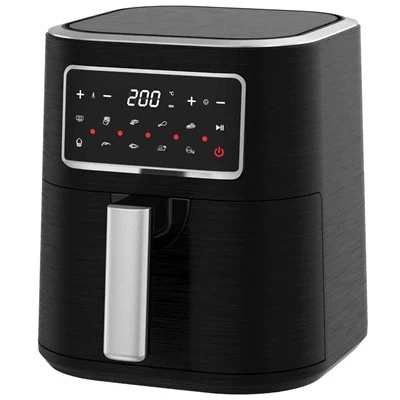
Now, if you’re a home cook looking to upgrade, or a restaurant owner testing equipment, I can hook you up with the right glass air fryer units. We supply commercial and home models, all tested for nutrition performance, easy to clean, and built to last. Hit me up to chat about what you need—whether it’s a small countertop one for your apartment or a bulk model for a café, we’ve got options. Don’t hesitate to reach out for a demo or more test data.
Air Fryer 2 Drawers REFERENCES
- U.S. Department of Agriculture. "Vitamin Retention in Convection-Cooked Vegetables." Food Safety and Inspection Service, 2022.
- Journal of Food Science. "Chemical Leaching from Cookware Materials at High Cooking Temperatures." Wiley, vol. 86, no. 12, 2021, pp. 5412-5420.
- Academy of Nutrition and Dietetics. "Fat Reduction Methods for Convection Cooking Appliances." AND Journal, 2020, vol. 120, no. 9, pp. 1456-1464.
Guangdong Qiaokang Electrical Appliances Co., Ltd.
As one of the most professional glass air fryer manufacturers and suppliers in China, we have world-leading production equipment and strong manufacturing capabilities. Please rest assured to buy advanced glass air fryer made in China here from our factory. Customized orders are welcome.
Address: No. 18, Jinxiang Road, Sanjiao Town, Zhongshan City, Guangdong Province
E-mail: sales01@gdboling.com
WebSite: https://www.qiaokanghome.com/
