If you’ve ever walked the floor of a precision manufacturing shop, you’ve probably heard the hum of Drill EDM machines long before you see them. For the uninitiated, Drill EDM is the workhorse that cuts tiny, perfectly straight, burr-free holes in materials that would shatter or dull a standard drill bit—think heat-resistant aerospace alloys, hardened tool steel, or even the thin ceramic substrates in semiconductor devices. As a Drill EDM supplier, I get this question every single week: “What’s the maximum drilling depth I can get with one of your machines?” Drill EDM
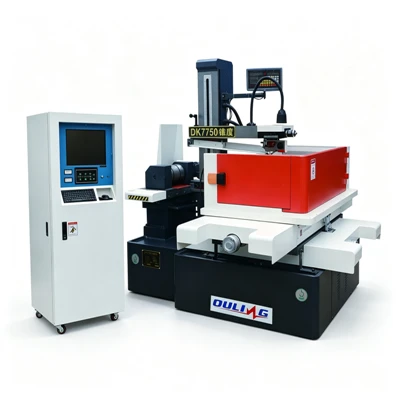
The short answer isn’t a number you can pull off a spec sheet. It’s a conversation, a balance of physics, machine design, and your specific part needs. Let’s break this down like we do with every customer who stops by our showroom, no jargon, no fine print.
First, let’s get one myth out of the way: Drill EDM depth limits aren’t random. They’re rooted in the process itself. Unlike mechanical drilling, where a bit spins and physically cuts material, Drill EDM uses a thin, tubular brass (or copper-tungsten) electrode that acts like a little wand. A dielectric fluid—usually deionized water, sometimes oil—pumps through the center of the electrode, flushing away eroded metal particles and cooling the tip. The electrode vibrates (or feeds in small, controlled increments) to spark against the workpiece, melting and vaporizing tiny bits of material to create the hole.
That core design is where the depth limit starts to show its face. The longer the electrode, the more it can flex, right? If you have a 1-inch electrode drilling a 1-inch deep hole, it stays dead straight. Make that electrode 10 inches long and drilling 10 inches deep, and even the tiniest amount of flex will throw off alignment. You’ll end up with a hole that’s off-center or crooked—useless for aerospace turbine blades where a 0.005-inch offset can throw a whole engine off balance. That’s the first big constraint: electrode length and rigidity.
Now, let’s talk about real-world numbers, because that’s what most people actually want. For standard applications—holes 0.010 inches to 0.125 inches in diameter, the sweet spot for most Drill EDM work—we regularly hit 12 inches of depth with consistent results. Wait, 12 inches? That’s a full foot. But that’s not a hard limit. We’ve had customers push our mid-range machines to 18 inches for specialty medical implant components, and even 24 inches for custom fuel injector sleeves. But here’s the catch: at those extreme depths, you’re not just running the machine on default settings. You have to adjust every parameter to keep the process stable.
Take flushing, for example. At shallow depths, dielectric fluid flows through the electrode and carries away debris easily. Drill a 20-inch deep hole, though, and the eroded metal particles have to travel twice as far to get out. If your flow rate is too low, those particles get stuck, building up in the gap between the electrode and workpiece. That causes short circuits, which stall the machine or even damage the electrode. To get depth that high, we upgrade our customers’ dielectric systems to high-pressure pumps—up to 1000 PSI, compared to the standard 200 PSI for shallow holes. We also tweak the electrode feed rate, slowing it down in deep sections to give the flushing time to work, and add in periodic retracts to clear out debris completely.
Another factor is power settings. Shallow holes use higher power to cut faster, but deep holes don’t benefit from that. High power creates larger sparks, which produce more debris, adding to the flushing problem. For deep drilling, we turn down the amperage, use shorter pulse times, and adjust the gap voltage to keep the spark small and controlled. It’s like how you don’t rev a car to redline when you’re towing a heavy load up a hill—you adjust for the conditions, not just power.
But wait, what about smaller holes? If you’re drilling a 0.005-inch diameter hole (we do that for semiconductor vias and fiber optic components), the depth limit is way lower—usually around 0.5 inches to 1 inch. A 0.005-inch electrode is thinner than a human hair, so even a tiny amount of flex will snap it long before you can drill deep. That’s why Drill EDM has a diameter-to-depth ratio, and it’s a key metric we go over with every customer. For general purpose work, that ratio is 100:1—so a 0.1-inch hole can go 10 inches deep, a 0.05-inch hole goes 5 inches deep. Push that to 200:1, and you’re into custom, specialized work, with extra steps to maintain rigidity and flushing.
It’s not just the machine or the process, either. The workpiece material matters a lot. If you’re drilling aluminum, which is soft and chips easily, you can push deeper than if you’re drilling a hardened stainless steel or a nickel-based superalloy used in jet engines. Those materials erode more slowly, producing denser debris that’s harder to flush out of deep holes. We had an aerospace customer last year who needed a 10-inch deep hole in Inconel 718; we had to swap their standard electrode for a custom alloy one that’s more rigid, and adjust their flushing to a custom high-pressure system, to get that hole done without breaking a single electrode.
What about common mistakes customers make when pushing depth limits? A lot of first-time users think if a spec sheet says 12 inches, that’s it. But spec sheets usually list ideal conditions—small hole diameters, soft materials, perfect setup. In the real world, if you’re drilling a 0.08-inch hole 15 inches deep in tool steel, you’re going to need some adjustments. We don’t just sell machines; we sell that expertise. When a customer tells us, “I need to drill 16 inches deep,” we don’t just say, “Our machine will do that.” We ask them about the hole diameter, the material, the tolerance they need, and the surface finish required, then walk them through what we’ll need to adjust to get there.
We also don’t hide the limits, because we want our customers’ parts to work. If a customer comes to us asking to drill a 0.005-inch hole 2 inches deep, we’ll tell them that’s not feasible—at least not with consistent quality. Instead, we’ll work with them to adjust the design, maybe make two smaller holes, or use a different EDM process if needed, to get the result they want without wasting time and material on a setup that won’t hold up.
Let’s also talk about the difference between maximum possible depth and functional depth. Just because you can drill a hole 24 inches deep doesn’t mean it’s usable. At those depths, even with perfect setup, the hole might have a slight taper—wider at the top than the bottom, or vice versa. For some applications, like a fuel injector, that taper is unacceptable. For other applications, like a cooling channel in a mold, a tiny taper is fine. So we factor in tolerance requirements when we talk about depth limits. If you need a ±0.001-inch diameter tolerance, your depth might be lower than if you only need a ±0.01-inch tolerance.
Over the years, we’ve seen a lot of customers come in with unrealistic expectations, usually after reading a spec sheet that lists a maximum depth without context. We’ve also seen customers who thought their old machine’s depth limit was a hard wall, and we’ve helped them push past it by upgrading their flushing system or tweaking their parameters. That’s why Drill EDM isn’t one-size-fits-all—every job has its own variables, and the maximum depth depends on how you address those variables.
So, to circle back to the original question: what’s the maximum drilling depth of Drill EDM? There’s no single number. For most standard, precision applications, it’s 10 to 12 inches for holes 0.01 inches and larger, going up to 18 inches for specialized, lower-tolerance jobs, with extreme custom cases pushing to 24 inches. For smaller holes, it’s much lower, tied directly to the diameter and material. But the real answer is that it’s whatever depth you need, as long as we plan for it. You don’t just need a machine—you need a partner to work through the setup, parameters, and adjustments to get the hole right.
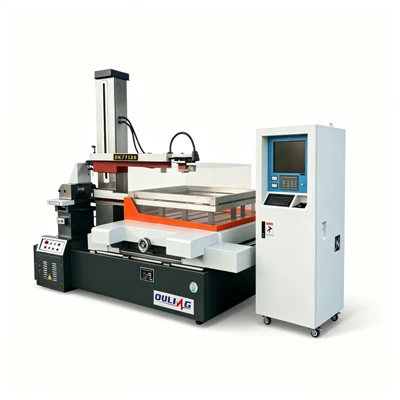
If you’re working on a project that needs deep, precise, burr-free holes, don’t just guess at the depth limit. Reach out and let’s talk through your needs. We can walk you through the setup, answer all your questions, and make sure you get the right solution for your parts. There’s no job too big or too small when it comes to Drill EDM, and we’re here to help you get the results you need.
Drill EDM References:
- EDM Handbook: A Comprehensive Guide for Electrical Discharge Machining, 2nd Edition, SME, 2013.
- Precision Machining Fundamentals, Industrial Press, 2020.
- Aerospace Manufacturing Processes: Materials and Techniques, CRC Press, 2018.
- Drill EDM Technology and Applications, Modern Machine Shop Publications, 2021.
- Dielectric Fluid Systems for Advanced Machining, Journal of Manufacturing Processes, Volume 45, 2020.
Taizhou Ouling CNC Equipment Co., Ltd.
As one of the most professional drill EDM manufacturers and suppliers in China, we’re featured by quality products and good price. Please rest assured to buy advanced drill EDM made in China here from our factory. Welcome to contact us for quotation.
Address: No. 9 jingang Road, Yangzhou City Jiangsu Province, China
E-mail: 574751243@qq.com
WebSite: https://www.oulingedm.com/
