Hey there, if you’re reading this, chances are you’ve stared at a wonky tabletop display stand at a trade show, a pop-up shop, or even your grandma’s craft fair and thought—“Wait, can this thing actually adjust?” Or maybe you’re deep in the process of ordering stands for your next big event, and you’re sick of settling for something that only works for one random-sized product. Let me cut to the chase: as a tabletop display stand supplier who’s fielded this exact question a hundred times a week, I’m here to spill the tea on whether these bad boys are adjustable. Spoiler: it’s not a one-size-fits-all answer, and that’s a good thing. Tabletop Display Stand
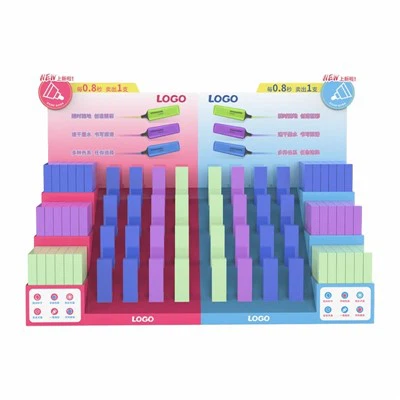
First off, let’s get real about what “adjustable” even means in this context. A lot of people toss that term around like it’s a superpower, but for display stands? It boils down to two main things: height adjustability and angle adjustability. Some stands will let you tweak both, some only one, and some… well, they’re fixed, like your cousin’s holiday plans. Let’s break this down by the most common types, since that’s what people actually run into.
Take the classic wire grid tabletop display stand. You know the ones—super lightweight, cheap, perfect for small items like earrings, lip balms, or keychains. Are these adjustable? Sort of. Most budget wire grids have pre-punched holes every inch or so, so you can slide the hooks or shelves up or down to fit different product heights. But here’s the catch: the holes are fixed, so your adjustments are limited to those increments. If you need a shelf exactly at 12.3 inches instead of 12, 13, or whatever, this might not cut it. I see this all the time with small business owners who first buy a cheap wire grid, then realize their new line of organic lip gloss tubes are a half-inch taller than their old ones, and they’re stuck with a gap that makes the whole display look messy. That said, we do make a mid-tier wire grid line with slotted holes instead of round ones—way more flexible. You can adjust the height in tiny 1/4-inch jumps, which is a game-changer. I had a client last month who sells custom vinyl stickers and was able to set each tier exactly to fit different sizes (3-inch, 5-inch, 8-inch stickers) without wasting space.
Next up, acrylic tabletop display stands—super popular for cosmetics, skincare, or even office supplies like phone stands. These are usually sleek, clear, and look fancy, but adjustability here is hit or miss. Most basic acrylic stands are fixed, designed for a specific product, like a single row of foundation bottles or a set of business cards. But if you upgrade to a modular acrylic set? That’s where the adjustability kicks in. Modular means you can add or remove shelves, swap out the vertical supports, even rearrange the order of tiers. We had a makeup brand client who started with a small 2-tier acrylic stand for their concealers, then grew and added two more tiers and a slanted shelf for their mascara—all without buying a whole new stand. That’s the beauty of modular acrylic: it’s adjustable, but not in a way that’s overcomplicated. You just snap the parts together, no tools needed. The only downside here is that modular acrylic is a bit pricier than fixed acrylic, but if you’re planning to expand your product line, it’s worth every penny.
Then there are the heavy-duty metal tabletop display stands, perfect for larger items like laptops, speakers, or even small kitchen appliances. These are built to last, and adjustability here is actually pretty standard, not just a fancy add-on. Most metal stands have a telescoping mechanism for height—you just loosen a knob or pull a lever and slide the top section up or down. Some even tilt, so you can angle a laptop screen to avoid glare during a demo, or angle a speaker so the sound hits your customers’ ears instead of bouncing off the table. I once helped a tech startup that was launching a portable projector—their metal stand let them adjust the height to 18 inches for tabletop demos and 3 feet if they wanted to do a quick floor demo (though they mostly used it tabletop). The only time metal stands aren’t adjustable is if they’re custom-made for a specific product, like a stand molded to fit a single model of speaker. But those are pretty rare, and most of our heavy-duty lines have full height and angle adjustability.
Wait, hold on—let’s not forget about the weird outliers. There are those tabletop display stands that let you adjust width, too. I’m talking about stands for things like picture frames, or even rolls of paper for calligraphers. These have side arms that slide out, so you can fit a 4×6 frame or a 12×18 frame with the same stand. That’s a super specific use case, but if that’s your thing, you’ll be stoked to know it exists. We actually stock a set of these adjustable width stands for local art fairs, and artists go crazy for them because they don’t have to buy a new stand every time they switch up their display.
Now, let’s talk about the myths. A lot of people think “adjustable” means it can fit every product ever made, but that’s just not true. Adjustability is always a trade-off between flexibility and durability. A wire stand with tiny 1/4-inch adjustments is great for small items, but if you try to put a 10-pound speaker on it, it’s going to bend. A modular acrylic stand is flexible, but if you cram too many heavy products on it, it might crack. That’s why we always tell clients to figure out two things first: what are you displaying, and how often will you need to adjust it? If you’re a seasonal pop-up that only uses a stand for 2 months a year and your product sizes never change, a fixed stand is fine. But if you’re a growing brand that adds new products or switches displays every few months, adjustable is non-negotiable.
Another myth: adjustable stands are way more expensive. Yeah, some high-end industrial ones cost a pretty penny, but you don’t have to break the bank. The slotted-hole wire grid I mentioned earlier is only $15 more than the basic fixed one, and the modular acrylic is $30 more than the fixed. For most small businesses, that’s a no-brainer, especially when you factor in that you won’t have to replace your stand every time your product line changes. I’ve seen so many people buy the cheap fixed stand, then toss it 6 months later because it doesn’t fit their new stuff, and end up spending more money in the long run. Adjustable stands are an investment, not a cost.
Wait, let’s get into the nitty-gritty of how adjustability works in these stands, just so you know what to look for when you’re shopping. For height, the most common mechanisms are: telescoping (for metal stands, smooth and sturdy), slot-and-lock (for wire and plastic stands, flexible but can wobble if you don’t tighten the locks), and snap-fit (for modular acrylic, super easy, no tools). For angle, it’s almost always a pivot joint with a locking screw, so you can tilt the stand to whatever angle you want and it stays put—no sliding down mid-demo.
I should also mention that custom tabletop display stands can be adjusted, too. If you have a really specific product, like a custom-shaped chocolate bar or a limited-edition vinyl record, we can build a stand that’s tailored to your product’s size and also has adjustability for future products. We did that for a craft chocolate brand last year—they wanted a stand for their 2×6-inch bars, but they also knew they’d be launching a smaller mini bar later, so we added adjustable hooks that could slide to fit both sizes. The best part? It didn’t look clunky or custom-made, it just worked.
Now, let’s talk about when you actually need an adjustable stand. If you’re: a small business that’s expanding their product line, a pop-up shop that changes displays every week, a trade show vendor who moves between events with different table heights, a brand that displays different product sizes, or someone who just likes switching up their display for Instagram (no shame, we all do it)—then yes, you need an adjustable stand. If you’re a one-person operation that sells the exact same product every day, or you’re displaying a single fixed item, a fixed stand is fine. But for 90% of the people I work with, adjustable is the way to go.
Let me share a quick horror story to drive this home. A few months back, a client came to us panicking—she had a trade show in 3 days, and her fixed wire stand for her jewelry had to go back to the office, leaving her with no display. She had a trunk full of different-sized necklaces and earrings, so the fixed holes on her old stand wouldn’t work. We rushed her a mid-tier adjustable wire grid with slotted holes, and she was able to set each tier to fit her longest necklaces, smallest earrings, and even her chunky statement pieces. She ended up winning a small business award at that show, and she still uses that stand now. That’s the power of adjustable stands—they can save you when things go wrong.
Wait, but is there any downside to adjustable stands? Like I said earlier, they can be a bit more complex, but not really. The only other thing is that some cheaper adjustable stands can be flimsy. You don’t want a metal stand that wobbles when you adjust the height, or an acrylic stand that snaps if you force the shelves. That’s why we only source stands from manufacturers that test each adjustability mechanism 100 times before they ship—no junk, no products that fall apart mid-event. We had a client once who bought a super cheap adjustable metal stand from a big box store, and it collapsed during a demo, spilling his $500 worth of skincare samples all over the floor. He came to us the next day, and we gave him a heavy-duty adjustable stand that’s still going strong 2 years later. Moral of the story: don’t cut corners on adjustability.
So, to circle back to the original question: Are tabletop display stands adjustable? The answer is yes, most of them are, but the level of adjustability depends on the type, the quality, and whether you choose a modular or fixed design. You don’t have to settle for something that only fits one size of product, or a stand that falls apart when you tweak the height. The key is to figure out your needs first: what are you displaying, how often will you need to adjust it, and how much durability do you need?
If you’re still not sure what kind of adjustable stand is right for you, just reach out. We’ve helped hundreds of people pick the perfect stand for their specific products and events, no pushy sales talk, no hidden fees. Whether you’re a small Etsy seller just starting out, a mid-sized brand expanding into retail, or a trade show vendor prepping for your next big event, we’ve got adjustable stands that fit every budget and every need. Don’t waste money on a fixed stand that’ll become obsolete in a few months—invest in an adjustable stand that grows with your brand.
Wait, before I go, let me just recap the main points so you don’t forget: Most tabletop display stands are adjustable, but adjustability ranges from tiny incremental tweaks (wire grids) to full modular swaps (acrylic) to heavy-duty height and angle adjustments (metal). Adjustability is a trade-off between flexibility and durability, so match the stand to what you’re displaying. Adjustable stands are worth the extra cost long-term, even if they’re a bit pricier upfront. And if you need help picking the right one, just connect with us.

Happy displaying!
Counter Display Boxes References:
- Display Trade Association. (2022). Guide to Tabletop Display Design and Functionality.
- Small Business Administration. (2023). Selecting Retail Display Solutions for Growing Product Lines.
- International Event Industry Association. (2021). Best Practices for Trade Show Display Adjustability.
- Material Science & Engineering Journal. (2020). Durability of Adjustable Display Stand Mechanisms for Commercial Use.
- National Retail Federation. (2022). Trends in In-Store Merchandising: Adjustable Display Solutions.
Guangzhou Guangjie Display Products Manufacturing Co., Ltd.
We’re well-known as one of the leading tabletop display stand manufacturers in China, also support customized service. Welcome to buy bulk high quality tabletop display stand at competitive price from our factory. If you have any enquiry about pricelist and quotation, please feel free to email us.
Address: No. 16-1 Lilv Road, Dashi Street, Panyu District, Guangzhou City, Guangdong Province
E-mail: guangjie_dp888@163.com
WebSite: https://www.gjdisplaystand.com/
