Distillation is a fundamental separation process widely used in the chemical, petrochemical, pharmaceutical, and food industries to separate mixtures based on differences in their boiling points. The design of distillation columns plays a crucial role in achieving efficient and cost – effective separation. As a distillation column supplier, I’m constantly on the lookout for the latest technologies that can enhance the performance of our products. In this blog, I’ll explore some of the most recent advancements in distillation column design. Distillation Column

Advanced Tray and Packing Technologies
One of the key areas of innovation in distillation column design is the development of advanced tray and packing materials. Traditional trays, such as sieve trays and valve trays, have been used for decades. However, new designs are emerging that offer improved efficiency, capacity, and flexibility.
- High – Efficiency Structured Packings: Structured packings are made up of corrugated metal or plastic sheets that are arranged in a specific pattern. They provide a large surface area for mass transfer between the vapor and liquid phases, resulting in higher separation efficiency compared to traditional trays. The latest structured packings are designed with optimized geometries to reduce pressure drop and increase throughput. For example, some modern structured packings use a combination of different corrugation angles and surface treatments to enhance liquid distribution and vapor – liquid contact. This not only improves the separation performance but also reduces energy consumption in the distillation process.
- Advanced Tray Designs: New tray designs are being developed to address the limitations of traditional trays. For instance, some trays incorporate proprietary valve or bubble – cap designs that provide better vapor – liquid dispersion and reduce weeping and entrainment. These advanced trays can operate over a wider range of flow rates, making them more suitable for varying feed compositions and production requirements. Additionally, self – cleaning trays are also being explored, which can prevent fouling and blockages, especially in applications where the feed contains solid particles or polymers.
Process Intensification
Process intensification is a concept that aims to achieve the same or better process performance with a smaller footprint, less energy consumption, and lower capital investment. In distillation column design, several process intensification techniques have been developed.
- Dividing Wall Columns (DWC): A dividing wall column is a single shell distillation column that contains an internal vertical partition. This partition allows for the simultaneous separation of a ternary or multi – component mixture into three or more products in one column, instead of using multiple conventional columns. DWCs can significantly reduce capital costs, energy consumption, and the plant footprint. They achieve this by eliminating the need for intermediate reboilers and condensers and by optimizing the internal reflux and vapor flow patterns. For example, in a typical petrochemical application where a ternary mixture needs to be separated, a DWC can reduce energy consumption by up to 30% and capital costs by up to 25% compared to traditional distillation sequences.
- Heat – Integrated Distillation Columns (HIDiC): HIDiC is another process intensification technology that aims to improve the energy efficiency of distillation. In a HIDiC, the heat released in the condenser is used to provide heat to the reboiler, either directly or indirectly. This reduces the external energy input required for the distillation process. There are two main types of HIDiCs: the internally heat – integrated distillation column (IHIDiC) and the externally heat – integrated distillation column (EHIDiC). IHIDiCs have the heat exchange surfaces inside the column, while EHIDiCs use external heat exchangers. HIDiCs can achieve significant energy savings, especially in high – pressure distillation processes where the temperature difference between the condenser and the reboiler is large.
Modeling and Simulation Tools
The use of advanced modeling and simulation tools has revolutionized distillation column design. These tools allow engineers to predict the performance of a distillation column under different operating conditions and design parameters before the actual construction.
- Computational Fluid Dynamics (CFD): CFD is a powerful tool that can simulate the fluid flow, heat transfer, and mass transfer phenomena inside a distillation column. By solving the Navier – Stokes equations and other relevant transport equations, CFD can provide detailed information about the velocity, temperature, and concentration profiles within the column. This information can be used to optimize the column design, such as the tray or packing layout, to improve the separation efficiency and reduce the pressure drop. For example, CFD simulations can help identify areas of poor liquid distribution or vapor maldistribution, which can then be addressed by modifying the column internals.
- Process Simulation Software: Process simulation software, such as Aspen Plus, ChemCAD, and ProMax, are widely used in the design and optimization of distillation columns. These software packages can model the thermodynamic behavior of the mixture, the mass and energy balances, and the separation performance of the column. They allow engineers to perform sensitivity analyses, evaluate different design alternatives, and optimize the operating conditions to achieve the desired product specifications. For instance, engineers can use process simulation software to determine the optimal number of trays or the height of the packing, the reflux ratio, and the feed location to minimize the energy consumption and maximize the product purity.
Control and Automation
The latest distillation column designs also incorporate advanced control and automation systems to ensure stable and efficient operation.
- Advanced Process Control (APC): APC systems use mathematical models and algorithms to optimize the operation of the distillation column in real – time. These systems can adjust the operating variables, such as the flow rates, temperatures, and pressures, to maintain the product quality within the desired specifications and to minimize the energy consumption. For example, an APC system can use model – predictive control (MPC) algorithms to predict the future behavior of the distillation process and to make proactive adjustments to the operating variables. MPC can handle multiple input and output variables and can take into account the constraints and limitations of the process.
- Smart Sensors and Instrumentation: The use of smart sensors and instrumentation has improved the monitoring and control of distillation columns. These sensors can provide accurate and real – time information about the process variables, such as the temperature, pressure, flow rate, and composition. For example, advanced sensors can measure the composition of the vapor and liquid phases using techniques such as near – infrared (NIR) spectroscopy or gas chromatography. This information can be used by the control system to make timely adjustments to the operating conditions and to detect any process upsets or abnormalities.
Conclusion
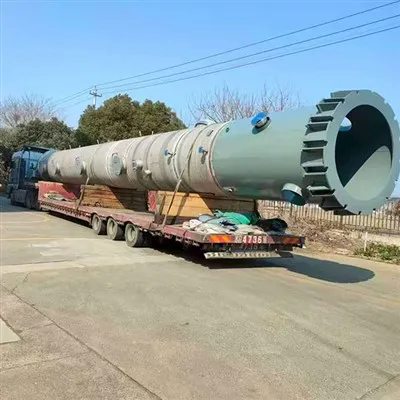
As a distillation column supplier, keeping up with the latest technologies in distillation column design is essential to provide our customers with high – performance and cost – effective solutions. The advanced tray and packing technologies, process intensification techniques, modeling and simulation tools, and control and automation systems discussed in this blog are just some of the many innovations that are shaping the future of distillation column design.
PMMA Cracking Furnace If you are in the market for a distillation column and want to take advantage of these latest technologies, I encourage you to reach out to us. Our team of experienced engineers can work with you to understand your specific requirements and design a distillation column that meets your needs. Whether you are looking for a small – scale laboratory column or a large – scale industrial column, we have the expertise and resources to deliver a high – quality solution. Contact us today to start the conversation about your distillation column project.
References
- Seader, J. D., Henley, E. J., & Roper, D. K. (2016). Separation Process Principles: Chemical and Biochemical Operations. Wiley.
- Kister, H. Z. (1992). Distillation Design. McGraw – Hill.
- Stichlmair, J., & Fair, J. R. (1998). Distillation: Principles and Practice. Wiley – VCH.
Wuxi Quansheng Industrial Equipment Co., Ltd.
As one of the most professional distillation column manufacturers and suppliers in China, we have world-leading production equipment and strong manufacturing capabilities. Welcome to buy high quality distillation column for sale here from our factory. For price consultation, contact us.
Address: No.10, Fulaiqiao Road, Hudai Town, Binhu District, Wuxi City, Jiangsu Province, China
E-mail: 397293586@qq.com
WebSite: https://www.pmmatech.com/
