If you’ve ever found yourself staring at a 10,000mAh smartphone battery, a 500Wh portable power station, or a large-format lithium-ion battery for electric vehicles, and wondered, “Can I charge this with a charger that has a smaller capacity than the battery itself?” you’re not alone. As a battery charger supplier who’s fielded this question dozens of times a month from hobbyists, small business owners, and even casual consumers, I can tell you the answer isn’t a simple “yes” or “no”—it’s a nuanced breakdown of how charging technology works, and why choosing the right charger for your battery matters far more than just matching raw capacity numbers. Battery Charger
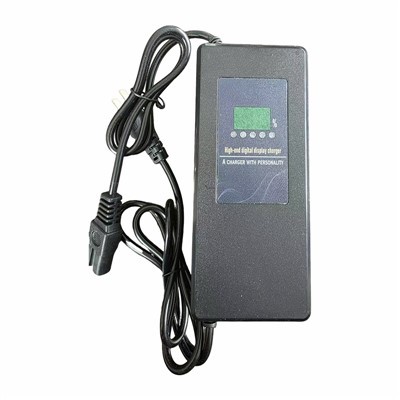
Let’s start with the basics to clear up a common mix-up: what “capacity” actually means for batteries vs. chargers. A battery’s capacity, measured in milliamp-hours (mAh) for small devices or watt-hours (Wh) for larger systems, is the total amount of energy it can store. A 10,000mAh phone battery, for example, holds enough energy to power a typical smartphone for a full day of use. A charger’s capacity, on the other hand, refers to its maximum output power, measured in watts (W)—not how much energy it can hold. Wait, that’s a key point: most people call a charger “small-capacity” because it outputs low watts, not because it has a tiny internal battery. A 10W phone charger is small compared to a 100W laptop charger, but that 10W doesn’t directly translate to how much energy it can transfer.
Now, the technical side of charging: Lithium-ion batteries, which power almost everything from phones to power tools to EVs, charge at a specific rate called the C-rate. The C-rate is a measure of the battery’s charging speed, where 1C means charging the full battery capacity in one hour. So a 10,000mAh battery charged at 1C would pull 10,000mA (10A) of current, while the same battery at 0.5C would pull 5,000mA, taking two hours to fully charge. Here’s where the charger comes in: a charger’s maximum output current (or wattage, for portable chargers) has to be high enough to match the battery’s required charging rate—within the battery’s safe limits.
This is where people get confused: if a battery is 10,000mAh, a 5,000mAh charger (wait, no, that’s a portable power bank, not a wall charger) would struggle, but a 10W wall charger—outputting about 2A at 5V, which works out to 10W—can absolutely charge a 10,000mAh phone battery. Why? Because while the battery’s capacity is twice that of the charger’s output per hour, the charger doesn’t “hold” energy like a battery—it delivers it as needed. The 10W charger will take roughly an hour to add 10,000mAh to the battery, but in reality, phone batteries rarely charge from 0 to 100% at full speed. Most use a two-stage charging process: first, constant current (fast charging at full speed) until they hit 80%, then constant voltage (slower, trickle charging) to top off the remaining 20%. So a 10W charger will actually take closer to 1.5 to 2 hours to fully charge a 10,000mAh battery, not 1 hour—and that’s totally safe.
But here’s the catch: this only works if you’re talking about a charger with enough output power to meet the battery’s maximum safe charging rate. If you try to charge a 500Wh portable power station (which is about 10 times the size of a phone battery) with a small 10W phone charger, you’re going to run into problems. Let’s do the math: 500Wh is 500 watts per hour. A 10W charger would take 50 full hours to fully charge that power station. That’s not just slow—it’s inefficient, and in some cases, it can damage the charger. Why? Because chargers are designed to deliver a certain amount of power consistently. If you’re asking a 10W charger to keep delivering power for days on end to charge a huge battery, it may overheat, its internal components may degrade faster, or it may shut down to protect itself from overload.
Another common scenario: charging an electric vehicle (EV) battery, which can be 60,000Wh or more. Can you charge an EV with a small 10W charger? Technically, the charger would technically supply enough power eventually, but it would take thousands of hours to fully charge. Not only is that impractical, but most EVs are designed to only accept power at rates that match their onboard charger’s capacity. A 10W charger can’t output nearly enough current to trigger the EV’s charging port to open, so it wouldn’t work at all. That’s because EVs use level 1, 2, and DC fast chargers, with levels ranging from 1.4kW to 350kW—none of which are small enough for a standard wall outlet, let alone a tiny phone charger.
Now, let’s talk about when it is safe (and even efficient) to charge a large battery with a smaller charger. If you’re using a battery charger that’s rated to match the battery’s C-rate at a lower speed, that’s a common practice for people who want to extend battery life. Many lead-acid batteries, used in cars, boats, and backup power systems, actually benefit from slow charging. A car battery that’s 50Ah (50,000mAh) can be safely charged at 0.1C, which is 5A. If a small charger only outputs 2A, charging it at 0.04C is slower, but it reduces the risk of overheating and gassing, which can extend the battery’s lifespan by months or even years. That’s a trick I learned early on in this business: customers often come to us asking for “fast chargers” for their batteries, but many don’t realize that slow, lower-capacity chargers can be the better long-term investment.
But there are red flags to watch for that come with using a mismatched small charger for a large battery. First, never force a charger that can’t deliver enough voltage. Most lithium-ion batteries require a specific charging voltage (e.g., a 3.7V phone battery charges at 4.2V). If your small charger only outputs 3.5V, it can’t get the battery to full charge, and you’ll get “trickle charging” that never actually replenishes the battery to its full capacity. Second, avoid cheap, unregulated chargers. As a battery charger supplier, I can’t stress this enough: not all chargers are created equal. A no-name 10W charger from a department store might skip overvoltage and overcurrent protection, which means it could overcharge your large battery, leading to swelling, reduced performance, or even safety hazards like fire. A reputable charger, even if it’s lower wattage, will have built-in safety features that stop charging when the battery is full, or shut down if it detects overheating.
I’ve seen this play out dozens of times with customers. Last year, a small farm supply store owner came to us panicking because he’d tried to charge his 12V 100Ah deep-cycle battery with a tiny 2A trickle charger he had left over from a lawnmower. He’d been charging it for three days, and the battery still wouldn’t start his tractor. Turns out, the 2A charger was too small to keep up with the battery’s self-discharge rate, which is about 1-2% per day for lead-acid batteries. The battery was just draining as fast as he was charging it. We recommended a 10A smart charger, which charged the battery fully in 10 hours, and since then, he’s added two more of our chargers for his other equipment. That’s the kind of problem that comes from not understanding the balance between charger capacity and battery needs.
Another common use case: charging power banks. A 20,000mAh portable power bank can be charged with a 5W charger, but it will take about 4 hours, vs. 2 hours with a 10W charger. That’s perfectly safe, as long as the charger has the right voltage rating. But if you use a 1W charger (like an old phone cable’s trickle charge), it might take 10 hours or more, and some power banks will detect that the charging current is too low and stop charging entirely. That’s not a fault of the charger or the power bank—it’s a compatibility check built into most portable devices to prevent damage from underpowered chargers.
So, to sum up the answer to the question “Can I charge a large-capacity battery with a small-capacity charger?”: It depends.
-
You can do it safely and efficiently if: the charger has the correct voltage rating, its maximum output wattage is high enough to meet the battery’s minimum required charging rate, and you don’t mind a longer charging time. This works well for small to medium batteries, like smartphones, portable power banks, and even small deep-cycle batteries.
-
You should avoid it if: the battery is very large (like EVs, large power stations, or industrial batteries), you need a fast charge, or the charger doesn’t have proper safety features. For these, you’ll want a charger rated to match your battery’s charging speed and capacity.
-
You can even choose it as a long-term win: Slow charging with a smaller, lower-wattage charger can extend your battery’s lifespan, which is a huge cost saver over time. It’s a strategy we recommend to many of our customers who use their batteries for occasional use, like backup power or recreational vehicles.
Now, if you’re still unsure which charger is right for your large-capacity battery, the last thing you want is to guess and risk damaging your battery or wasting time on a charger that doesn’t work. As a battery charger supplier who’s worked with everything from hobbyists’ small batteries to industrial energy storage systems, I can help you find the perfect match—whether you need a fast charger for daily use, a slow trickle charger for long-term storage, or a regulated smart charger with all the safety features to protect your investment.
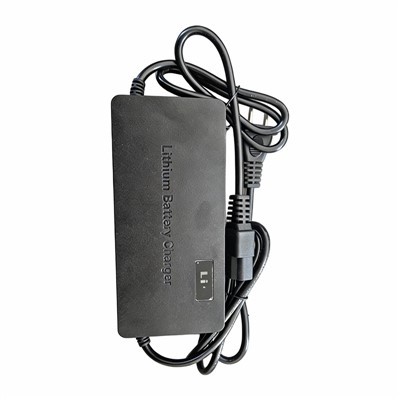
Don’t leave your battery’s performance to chance. Reach out to our team to discuss your specific battery needs, and we’ll help you pick the right charger at a price that fits your budget.
Battery Charger References
- Linden, D., & Reddy, T. B. (2002). Handbook of Batteries (3rd ed.). McGraw-Hill Education.
- US Department of Energy. (2021). Electric Vehicle Charging Basics. Office of Energy Efficiency & Renewable Energy.
- Battery University. (2022). Charging Lithium-Ion Batteries. Cadex Electronics Inc.
- Deep Cycle Battery Manufacturer’s Association. (2020). Best Practices for Charging Lead-Acid Batteries.
Tianchang Hengze Technology Co., Ltd.
With abundant experience, we are one of the most professional battery charger manufacturers and suppliers in China. Please rest assured to buy bulk battery charger made in China here from our factory. If you have any enquiry about quotation, please feel free to email us.
Address: No. 8 Sanxing Road, Qinlan Town Industrial Park, Tianchang City, Chuzhou City, Anhui Province, P.R. China
E-mail: 604894957@qq.com
WebSite: https://www.hengzebc.com/
