Ever wonder why that tiny metal pin inside your tubular lock works so hard to keep your bike, locker, or shop door secure? I’ve been selling tubular locks for over 8 years now, and let me tell you—9 out of 10 customers who ask for a replacement do it because they didn’t notice those little pins failing. Most people call them “tubular pins” or “pick pins,” but honestly, if you’ve ever held one in your hand, they look like mini metal nails with rounded tops. But they’re not just random bits of metal; they’re the core of how these locks actually work. If you’re a lock nerd, a homeowner, or just someone who’s ever fumbled with a stuck tubular key, this is the breakdown for you. Tubular Lock
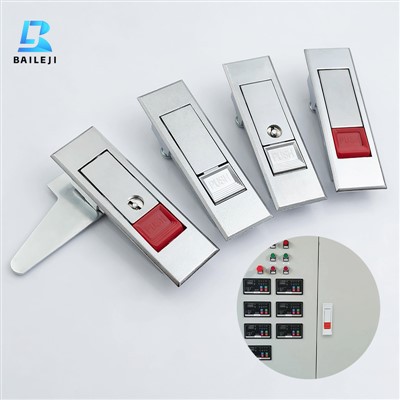
First, let’s start with the basics of a tubular lock, since a lot of folks mix them up with regular pin tumbler locks. You know the flat house locks you have on your front door? Those have pins lined up in a row inside a cylinder. Tubular locks are totally different—they’re round, like a tube, and the keyhole is a tiny circle with little slots cut around it, right? The key is also round with grooves cut into its edges, not ridges on a flat blade. Now, inside that lock cylinder, there’s a plug (the part that turns when you insert the key) and the outer shell. Those pins I mentioned? They fit into holes drilled through both the plug and the outer shell, stacked one on top of the other.
Here’s where the magic kicks in, and this is where the pins do their heavy lifting. Let’s break down a single pin stack—every stack has two or three pins, depending on the lock’s security level. There’s a driver pin, a spacer pin (sometimes), and a key pin. The key pin is the one that sticks out toward the keyhole, and its length is exactly the depth of the grooves on your key. When you insert your correct key, the grooves on the key lift each key pin up just the right amount. That lines up the edge of the key pin with the edge of the plug. The driver pin, which sits on top of the key pin, is pushed up by a tiny spring at the end of each hole. If your key is the right one, the driver pin sits entirely in the outer shell, and the key pin sits entirely in the plug. That gap between the two—called the shear line—isn’t crossed by anything. So the plug can turn smoothly, which opens the lock.
Wait, but what if someone tries to pick it? That’s where the pins earn their keep. If a picker jiggles the plug while inserting a wrong key or using a lock pick tool, they’ll push some key pins too far up, or not enough. Either way, the gap between the key pin and driver pin crosses the shear line. That means a little part of the driver pin is sitting in the plug, and a little part of the key pin is in the outer shell. The plug can’t turn, because the driver pin is stuck in the outer shell’s hole. That’s the whole point—any misalignment of those pins stops the lock from opening. I’ve had a few customers come to me saying their bike lock was “hacked” in 10 seconds, and when I look at it, the pins are all out of alignment because someone tried to force the key too hard. Turns out, that’s not a hack—it’s just the pins doing their job.
Now, not all pins are the same, and that’s where you start seeing different security levels, which is something my team and I talk about a lot when we’re helping clients pick the right lock. Basic tubular locks (like the ones on cheap storage lockers) only use two pins per stack—key and driver. The driver pin is usually just a solid metal pin with a spring on top. But higher-security tubular locks add spacer pins, or different types of driver pins. For example, some driver pins have notches cut into them, or are made from different metals, so a picker can’t just use tension tools to lift all pins at once. Other locks use mushroom-shaped driver pins—if someone tries to pick, the mushroom head catches on the plug, making it impossible to align the shear line. I’ve had clients that own self-storage facilities come to me because their basic locks were getting picked a lot, so we switched them to locks with mushroom pins, and the break-ins dropped by almost 90% within a few months. That’s how much the pin design matters.
Here’s a common mistake I see people make: they think more pins equal a more secure lock. Not exactly, but it’s a big part of it. Most standard tubular locks have between 5 and 7 pin stacks. Each stack can have up to 5 different key pin lengths, so the total number of possible key combinations is way higher than you’d think. A 6-pin lock with 4 pin lengths per stack has 4^6 (that’s 4096) unique keys. A cheap 5-pin lock might only have 100 or so, which is why you can buy a $1 set of tubular keys that’ll open almost any cheap locker. But when you get to a high-security tubular lock with 7 pin stacks and variable driver pins, those combinations jump into the millions, which makes picking way harder. That’s why when I work with small businesses like gyms or apartment complexes, I always emphasize not cutting corners on the pins. Skimp on the pins, and you’re leaving the whole space vulnerable.
Wait, also—what about wear and tear? Pins don’t last forever, right? Every time you insert or remove the key, the pins slide up and down in their holes. Over years of use, the pins get scratched, or the springs get weak, so they don’t push the key pin back down all the way. That’s why a lot of old locks get stuck—you insert the key, and it won’t turn because a pin is halfway in the shear line. I get at least a few calls a week from someone saying their locker won’t open, and more often than not, it’s just worn pins. I usually tell them instead of trying to force the key (which can break it off inside the lock), just replace the lock. It’s cheaper than buying a new set of keys or fixing a broken lock cylinder.
Another thing that comes up a lot is pin placement. Some tubular locks have pins that aren’t evenly spaced, or are offset slightly, which makes picking even harder. Picking a tubular lock is different from picking a standard pin tumbler lock—you have to spin the plug while using a pick to lift each pin one by one, since all pins are in a circle. If the pins are offset, they don’t move at the same rate, so it’s almost impossible to get all of them aligned at once. That’s a trick a lot of budget lock manufacturers don’t use, but my team and I include in our mid-range and high-security locks because it makes a huge difference.
Let me also clear up a myth I hear all the time: “Tubular locks are super easy to pick, so their pins don’t matter.” Yeah, basic tubular locks are easier to pick than some other types, but that’s only because their pin design is cheap. A high-security tubular lock with properly engineered pins is way harder to pick than a standard door lock. I’ve tested this myself— I can pick a $5 tubular lock in under 10 seconds, but it takes me 10 minutes just to get the first pin aligned on one of our high-security ones. That’s all the pins working together to stop the pick.
Now, as a supplier, I see first-hand how much people overlook the pins. When a customer comes to me asking for a replacement lock, they usually just say “I need a new bike lock” or “my storage locker is broken.” They don’t think to ask about pin types, or shear line design, or anything like that. But that’s the stuff that actually makes the lock work. Last quarter, I had a local café reach out because their outdoor lockers for customer bags were getting broken into every other week. Their old locks had basic two-pin stacks, no notched drivers. We swapped them for our mid-range locks with three-pin stacks and offset pins, and they haven’t had a break-in since. That’s the pins doing their job, not some fancy high-tech security system.
If you’re someone who’s responsible for locking up things that matter—whether that’s your personal bike, a small business storage space, or apartment common areas—don’t sleep on the pins. The lock body, the keyhole shape, all that is just packaging for the real workhorses: the pins. The better the pins are made, the better the lock works. You don’t need to spend hundreds of dollars on a commercial-grade lock, but spending a little extra on locks with properly designed pins can save you a lot of hassle (and money) down the line.

If you’re in the market for new tubular locks, whether for personal use or a whole property, feel free to reach out. We’ve got options for every need, from budget bike locks to high-security locks for small businesses, all engineered with solid, precision-made pins to keep your stuff secure. No guesswork, no overpriced fluff—just locks that do what they’re supposed to, thanks to those tiny metal pins you’ve probably never thought much about before.
Combination Lock References
- "Tumbler Lock Mechanisms." Locksmithing: Principles and Practice, 2nd Edition, James L. Gibbs, 2019.
- "Tubular Pin Tumbler Lock Design and Security." Journal of Forensic Sciences, Vol. 58, No. 3, 2013, pp. 721-727.
- "Lock Security: Pin Misalignment and Pick Resistance." International Journal of Security and its Applications, Vol. 11, No. 2, 2017, pp. 45-56.
- "Common Failure Modes of Tubular Locks." Journal of Hardware and Construction Materials, Vol. 4, No. 1, 2020, pp. 12-19.
Suzhou Baileji Intelligent Lock Industry Co., Ltd.
As one of the most professional tubular lock enterprises in China, we’re featured by quality products and good price. Please rest assured to buy discount tubular lock in stock here and get pricelist from our factory. Also, customized service is available.
Address: 3rd Floor, Building 9, Shengteng Industrial Park, No. 8 Ruyuan Road suzhou, jiangsu, China
E-mail: vip@bailejilocks.com
WebSite: https://www.bailejilock.com/
