Hey there! I’m a supplier in the insulating paper business, and today, I want to chat with you about the new technologies in insulating paper manufacturing. It’s a super exciting field, and these new techs are really shaking things up. Insulating Paper

First off, let’s talk about nanotechnology. Nanotechnology has been making waves in a whole bunch of industries, and insulating paper is no exception. By integrating nanoparticles into the paper during the manufacturing process, we can significantly enhance its performance. For example, some manufacturers are using nano – silica particles. These particles are incredibly small, and when added to the insulating paper, they can improve its dielectric strength. Dielectric strength is a measure of how well an insulator can withstand an electric field without breaking down. With nano – silica, we’re seeing a notable increase in this property, which means the paper can work more effectively in high – voltage applications.
Another cool aspect of using nanotechnology in insulating paper is the improvement in thermal conductivity. In electrical systems, heat is a major enemy. Excess heat can cause the insulating material to degrade over time, leading to potential failures. But by including certain nanoparticles, we can boost the paper’s ability to conduct heat away. This helps in maintaining the optimal operating temperature of the electrical equipment and extends the lifespan of the insulation.
Then there’s the use of advanced fiber materials. Traditional insulating papers were often made from natural fibers like cellulose. While cellulose is a great material, it has its limitations. For instance, it can absorb moisture, which can reduce its insulating properties. Newer technologies are turning to synthetic fibers. These synthetic fibers, such as aramid fibers, have some amazing characteristics. They’re highly resistant to heat, chemicals, and moisture.
Aramid fibers are known for their high strength – to – weight ratio. This means that even though the fibers are lightweight, they can provide excellent mechanical support to the insulating paper. In addition, they have a much higher thermal stability compared to cellulose fibers. This makes them ideal for use in high – temperature environments, like in some industrial electrical transformers.
Some manufacturers are also experimenting with hybrid fiber systems, where they combine natural and synthetic fibers. This approach aims to take advantage of the best properties of both types of fibers. For example, the natural fibers can provide a certain level of flexibility and cost – effectiveness, while the synthetic fibers can enhance the heat and moisture resistance.
Automation is another big thing in modern insulating paper manufacturing. In the past, a lot of the processes in making insulating paper were manual, which was not only time – consuming but also prone to human error. Now, with the development of automation technology, many steps in the manufacturing line are being automated.
Robots are being used for tasks like raw material handling, paper cutting, and stacking. These robots can work with high precision and at a much faster pace than human workers. They can operate 24/7 without getting tired, which means increased production efficiency.
Automated quality control systems are also a game – changer. These systems use sensors and cameras to detect any defects in the paper, such as holes, tears, or inconsistent thickness. They can quickly identify and reject any sub – standard products, ensuring that only high – quality insulating paper reaches the market.
Digital printing technology is also making its way into insulating paper manufacturing. In the past, if you wanted to add some markings or labels to the insulating paper for identification purposes, it was a relatively complex and time – consuming process. Now, with digital printing, it’s a breeze.
You can print clear, detailed markings directly onto the paper with high precision. This is especially useful for electrical applications where different parts of the insulation may need to be clearly identified. Digital printing also allows for quick changes to the markings. If you need to update a part number or add a new safety label, you can do it easily without having to set up a whole new printing process.
Environmentally – friendly manufacturing technologies are also getting more attention. As more and more companies are looking to reduce their environmental impact, the insulating paper industry is no exception. One technology that’s becoming popular is the use of water – based adhesives in the manufacturing process.
Traditional adhesives often contained solvents that were harmful to the environment and human health. Water – based adhesives, on the other hand, are much more eco – friendly. They have lower volatile organic compound (VOC) emissions, which means less air pollution. They also have the advantage of being easier to clean up and dispose of.
Recycling technologies for insulating paper are also being developed. Instead of just throwing away used insulating paper, we can now recycle it and turn it into new paper products. This not only reduces waste but also conserves natural resources. Some recycling processes involve breaking down the used paper into its basic fibers and then using them to make new insulating paper.
So, these are some of the new technologies in insulating paper manufacturing. As you can see, there’s a lot going on in this field, and these technologies are really pushing the boundaries of what insulating paper can do. Whether it’s improving performance, increasing efficiency, or being more environmentally friendly, these new techs are making insulating paper a better product.
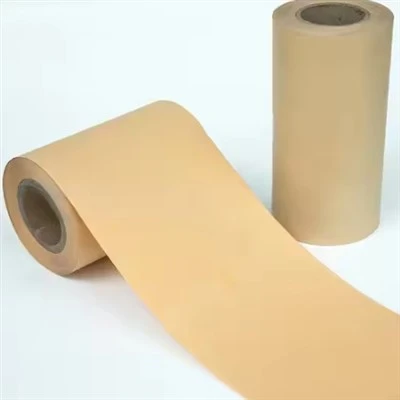
If you’re in the market for high – quality insulating paper, I’d love to have a chat with you. I can tell you more about how these new technologies are incorporated into our products and how they can benefit your business. Whether you’re in the electrical equipment manufacturing, power generation, or any other industry that requires reliable insulation, we’ve got the right solution for you. So, don’t hesitate to reach out and let’s start a conversation about your insulating paper needs.
Carbon Fiber Flexibility References:
- Research papers on nanotechnology in insulation materials
- Industry reports on advanced fiber materials for insulation
- Publications on automation in manufacturing processes
- Studies on digital printing in industrial applications
- Articles on environmentally – friendly manufacturing technologies in the paper industry
Wenzhou Gisen Insulation Material Co., Ltd.
As one of the most professional insulating paper manufacturers and suppliers in China, we’re featured by quality products and good service. Please rest assured to wholesale customized insulating paper from our factory. Contact us for quotation and free sample.
Address: Diyan Industrial Zone, Wengyang Subdistrict, Yueqing City, Zhejiang Province
E-mail: gisen888@126.com
WebSite: https://www.giseninsulation.com/
