What is the return on investment for a forklift robot? Forklift Robot
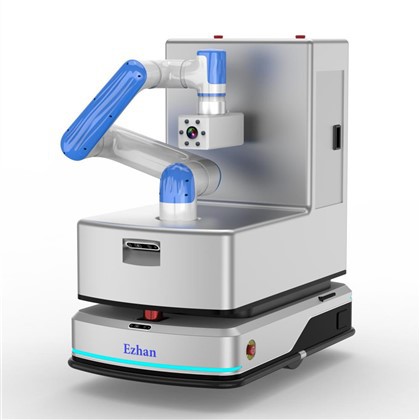
As a supplier of forklift robots, I am frequently asked about the return on investment (ROI) for these innovative machines. In today’s fast – paced industrial landscape, businesses are constantly seeking ways to improve efficiency, reduce costs, and enhance safety. Forklift robots offer a promising solution, but understanding the ROI is crucial for making informed purchasing decisions.
Understanding the Initial Investment
The first step in calculating the ROI of a forklift robot is to understand the initial investment. This includes the purchase price of the robot itself, installation costs, and any necessary training for your staff to operate and maintain the machine.
The cost of a forklift robot can vary widely depending on its features, capabilities, and load – handling capacity. Basic models may start at around $20,000, while more advanced, high – capacity robots can cost upwards of $100,000. Installation costs typically involve setting up charging stations, programming the robot’s navigation system, and integrating it into your existing warehouse management system. These costs can range from a few thousand dollars to tens of thousands, depending on the complexity of the installation.
Training is also an important part of the initial investment. While forklift robots are designed to be relatively easy to operate, your staff still needs to understand how to interact with the robot, perform basic maintenance tasks, and troubleshoot common issues. Training costs can include hiring external trainers or using in – house resources, and may amount to several thousand dollars.
Operational Cost Savings
One of the most significant factors contributing to the ROI of a forklift robot is the operational cost savings it can generate. These savings can be realized in several ways.
Labor Costs
Traditional forklift operators require a significant investment in terms of wages, benefits, and training. By replacing human forklift operators with robots, you can reduce labor costs. Forklift robots can work around the clock without breaks, sick leave, or overtime pay. For example, if you have a three – shift operation, you could potentially eliminate the need for three full – time forklift operators. Assuming an average annual salary of $40,000 per operator, this could result in annual labor savings of $120,000.
Energy Efficiency
Forklift robots are generally more energy – efficient than traditional forklifts. They are often powered by rechargeable batteries, which can be more cost – effective to operate than internal combustion engines. Additionally, robots can be programmed to optimize their routes and movements, reducing unnecessary energy consumption. Over time, these energy savings can add up to a significant amount.
Maintenance and Repair
Forklift robots typically have fewer moving parts than traditional forklifts, which means they require less maintenance and are less prone to breakdowns. This can result in lower maintenance costs and less downtime. While the initial purchase price of a forklift robot may be higher, the long – term maintenance savings can offset this cost.
Productivity and Throughput Improvements
Forklift robots can significantly improve productivity and throughput in your warehouse or distribution center.
Consistent Performance
Robots are capable of performing repetitive tasks with a high degree of accuracy and consistency. They do not get tired or distracted, which means they can maintain a steady pace of work throughout the day. This consistent performance can lead to increased productivity and reduced errors. For example, a forklift robot can load and unload pallets at a consistent rate, ensuring that your inventory management processes run smoothly.
Faster Cycle Times
Forklift robots can be programmed to optimize their routes and movements, which can result in faster cycle times. They can quickly pick up and transport loads, reducing the time it takes to move goods within your facility. This can improve throughput and help you meet customer demand more efficiently.
Integration with Warehouse Management Systems
Forklift robots can be integrated with your existing warehouse management system (WMS). This allows for seamless communication between the robot and the WMS, enabling real – time inventory tracking and optimized order fulfillment. By integrating the robot into your WMS, you can improve overall warehouse efficiency and reduce the risk of stockouts or overstocking.
Safety Benefits
Safety is another important consideration when evaluating the ROI of a forklift robot.
Reduced Workplace Accidents
Traditional forklift operations can be dangerous, with a high risk of accidents such as collisions, tip – overs, and pedestrian injuries. Forklift robots are equipped with advanced safety features such as sensors and cameras that can detect obstacles and prevent collisions. By reducing the number of accidents, you can avoid costly workers’ compensation claims, property damage, and legal liabilities.
Improved Worker Safety
By replacing human forklift operators with robots, you can reduce the exposure of your workers to potentially hazardous working conditions. This can improve worker morale and reduce absenteeism, leading to a more productive workforce.
Calculating the ROI
To calculate the ROI of a forklift robot, you need to consider the initial investment, operational cost savings, productivity improvements, and safety benefits over a specific period of time, typically three to five years.
The formula for calculating ROI is:
ROI = (Net Profit / Cost of Investment) x 100
Net profit is calculated by subtracting the total cost of ownership (including the initial investment and ongoing operational costs) from the total benefits (including cost savings and productivity improvements) over the chosen time period.
For example, if the initial investment in a forklift robot is $50,000, and over a three – year period, the robot generates $80,000 in cost savings and productivity improvements, and the total operational costs (including maintenance, energy, etc.) are $20,000, then the net profit is $80,000 – ( $50,000+ $20,000) = $10,000.
The ROI is then ($10,000 / $50,000) x 100 = 20%
Making the Decision
When considering whether to invest in a forklift robot, it’s important to conduct a comprehensive cost – benefit analysis. Look at your specific business needs, operational processes, and financial situation. Consider factors such as the size of your warehouse, the volume of goods you handle, and the labor market in your area.

In many cases, the ROI of a forklift robot can be quite attractive. However, it’s also important to work with a reputable supplier who can provide you with accurate information, reliable support, and a high – quality product.
Robot Accessories If you’re interested in learning more about the ROI of our forklift robots and how they can benefit your business, we encourage you to reach out to us. Our team of experts is ready to discuss your specific requirements and help you make an informed decision. Contact us to start a conversation about how our forklift robots can transform your warehouse operations.
References
- "Automated Forklifts: A Cost – Benefit Analysis" by Logistics Management Magazine
- "The Impact of Robotics on Warehouse Productivity" by Material Handling Industry Association
- "Safety Improvements with Forklift Robots" by Occupational Safety and Health Journal
Shenzhen Ezhan Technology Co., Ltd.
We’re known as one of the most reliable forklift robot manufacturers and suppliers in China. With abundant experience, we warmly welcome you to buy bulk customized forklift robot from our factory. If you have any enquiry about cooperation, please feel free to email us.
Address: Room 1808, 1809, 1810, Building 2, Aipark, Baolong 4th Road, Longgang District, Shenzhen City
E-mail: sales01@ezhankeji.com
WebSite: https://www.ezhanrobot.com/
